Loading…
Best Snacks for Picky-Eater Kids (2026)
For picky-eater kids ages 2–8, the most-recommended snacks are veggie-first pouches (Cerebelly Brain-Building Pouches, Serenity Kids Veggie Pouches, Once Upon a Farm Smart Blends), hidden-veggie baked snacks (Wholly Veggie Veggie Tots, Bitsy's), and high-protein kid-format products (Happy Baby Yogurt Bites, Two Good kids yogurt). All are Tier A–C (≤5g added sugar) and solve specific picky-eater patterns — vegetable refusal, protein refusal, or "I will only eat sweet things."
TL;DR
The 20 lowest-added-sugar picky-eater snacks in our catalog — every product here has 5g or less added sugar per serving, ranked ascending. Average recorded added sugar in our picky-eater snacks catalog pool is 1.8g. The American Heart Association recommends kids ages 2–18 keep added sugar under 25g per day.
Quick comparison: top 10 by added sugar
Recorded values per serving; portions differ. Missing data is shown as unknown. Open a product for ingredients and source details.
Swipe across to compare sugar and tiers.
| Brand | Product | Serving | Added sugar | Total sugar | Tier | Source & recorded check |
|---|---|---|---|---|---|---|
| Chomps | Best Selling Beef | 1.15 OZ | 0g | 0g | Sugar free· A | Website importCheck date not recorded |
| Chomps | Jalapeño Beef | 1 Stick (32g/1.15oz) | 0g | 0g | Sugar free· A | Manually entered label data |
| Chomps | Jalapeño Beef Chomplings | 1 Stick (14g/0.5oz) | 0g | 0g | Sugar free· A | Manually entered label data |
| Chomps | Original Beef Snack Sticks | 1.15 OZ | 0g | 0g | Sugar free· A | Website importCheck date not recorded |
| Chomps | Original Turkey | 1.15 OZ | 0g | 0g | Sugar free· A | Website importCheck date not recorded |
| Chomps | Sea Salt Beef | 1.15 OZ | 0g | 0g | Sugar free· A | Website importCheck date not recorded |
| Chomps | Smoky BBQ Beef | 1.15 OZ | 0g | 0g | Sugar free· A | Website importCheck date not recorded |
| Chomps | Taco Seasoned Beef | 1.15 OZ | 0g | 0g | Sugar free· A | Website importCheck date not recorded |
| That's It | Apple + Strawberry Crisps | Not recorded | 0g | 7g | No added sugar· B | Open Food FactsCheck date not recorded |
| Catalina Crunch | Apple Turnover Protein Cereal | Not recorded | 0g | 1g | No added sugar· B | Open Food FactsCheck date not recorded |
The List: 20 picky-eater snacks under 5g added sugar
- 1
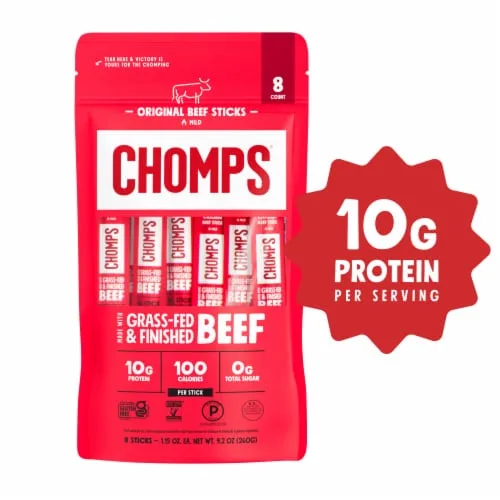 Sugar free· A
Chomps
Best Selling Beef
0g added sugar
Meat Sticks & Jerky - 2
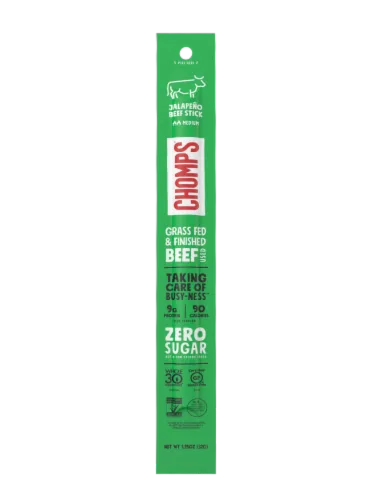 Sugar free· A
Chomps
Jalapeño Beef
0g added sugar
Meat Sticks & Jerky - 3
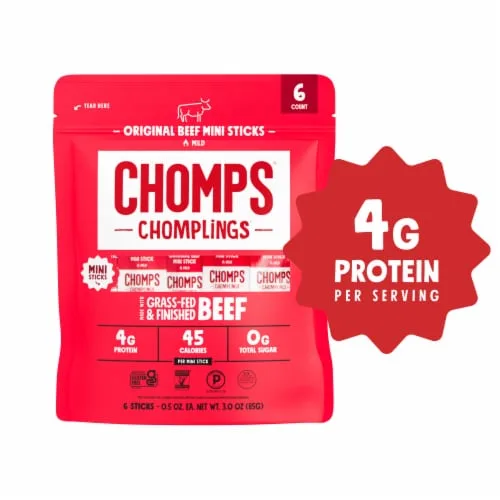 Sugar free· A
Chomps
Jalapeño Beef Chomplings
0g added sugar
Meat Sticks & Jerky - 4
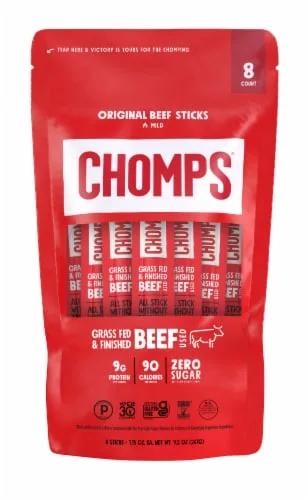 Sugar free· A
Chomps
Original Beef Snack Sticks
0g added sugar
Meat Sticks & Jerky - 5
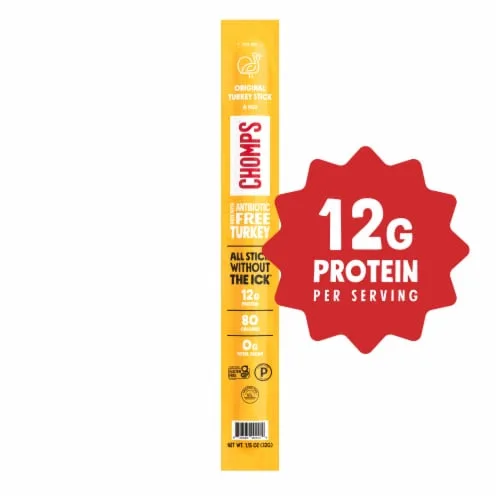 Sugar free· A
Chomps
Original Turkey
0g added sugar
Meat Sticks & Jerky - 6
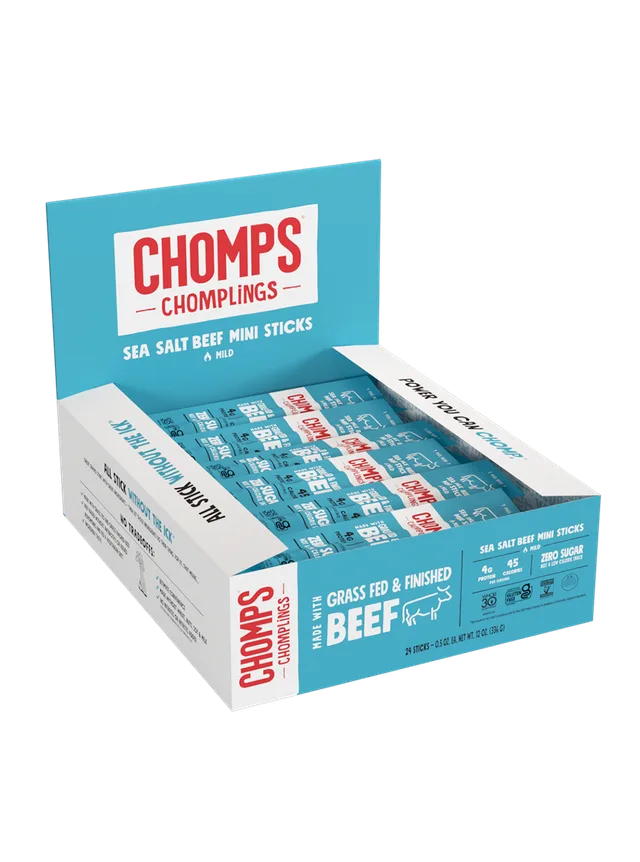 Sugar free· A
Chomps
Sea Salt Beef
0g added sugar
Meat Sticks & Jerky - 7
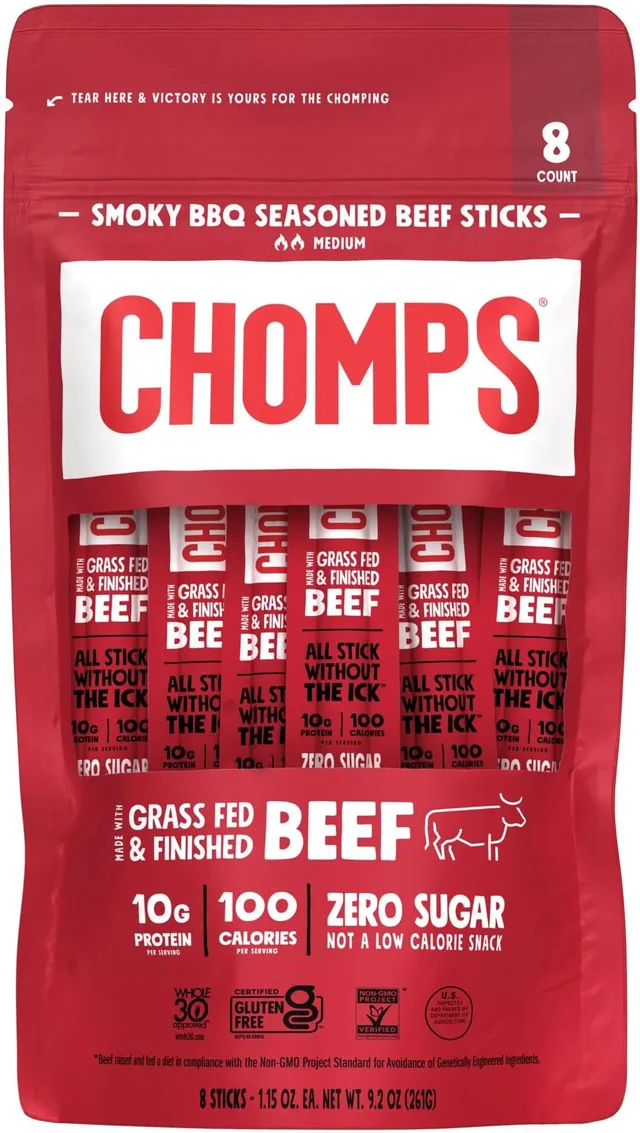 Sugar free· A
Chomps
Smoky BBQ Beef
0g added sugar
Meat Sticks & Jerky - 8
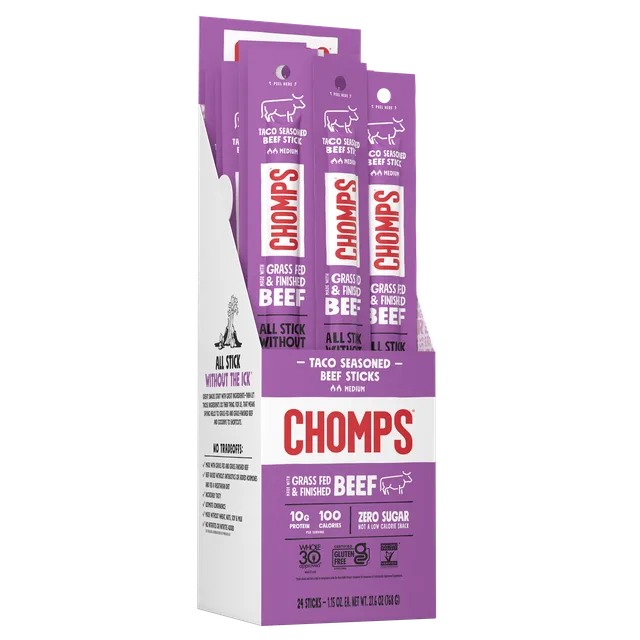 Sugar free· A
Chomps
Taco Seasoned Beef
0g added sugar
Meat Sticks & Jerky - 9
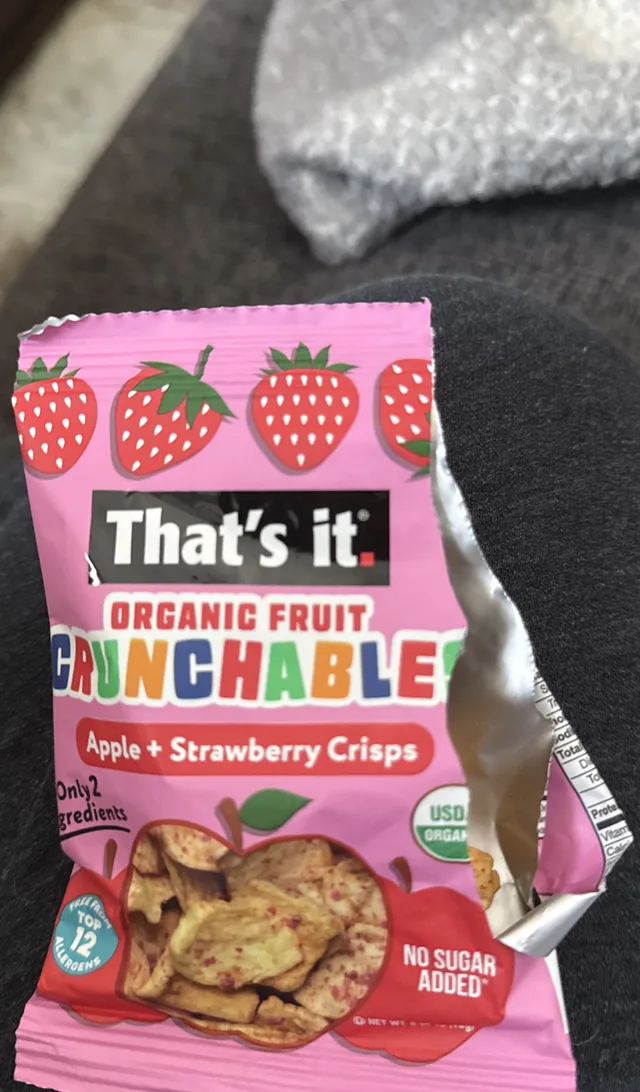 No added sugar· B
That's It
Apple + Strawberry Crisps
0g added sugar
Crackers & Chips - 10
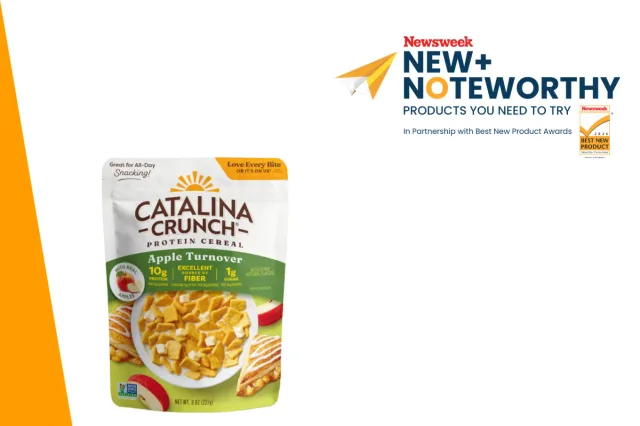 No added sugar· B
Catalina Crunch
Apple Turnover Protein Cereal
0g added sugar
Cereal - 11
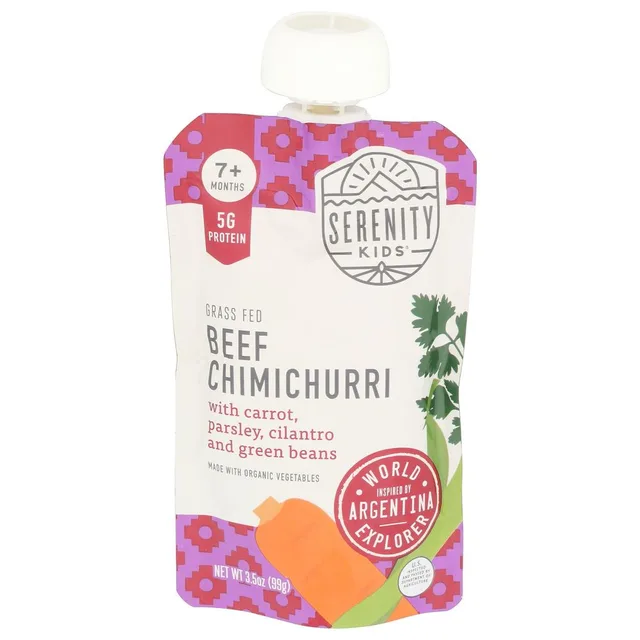 No added sugar· B
Serenity Kids
Beef Chimichurri
0g added sugar
Pouches - 12
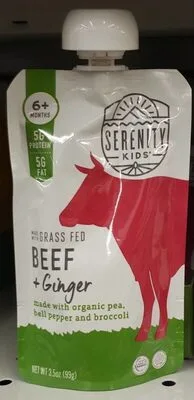 No added sugar· B
Serenity Kids
Beef + Ginger
0g added sugar
Pouches - 13
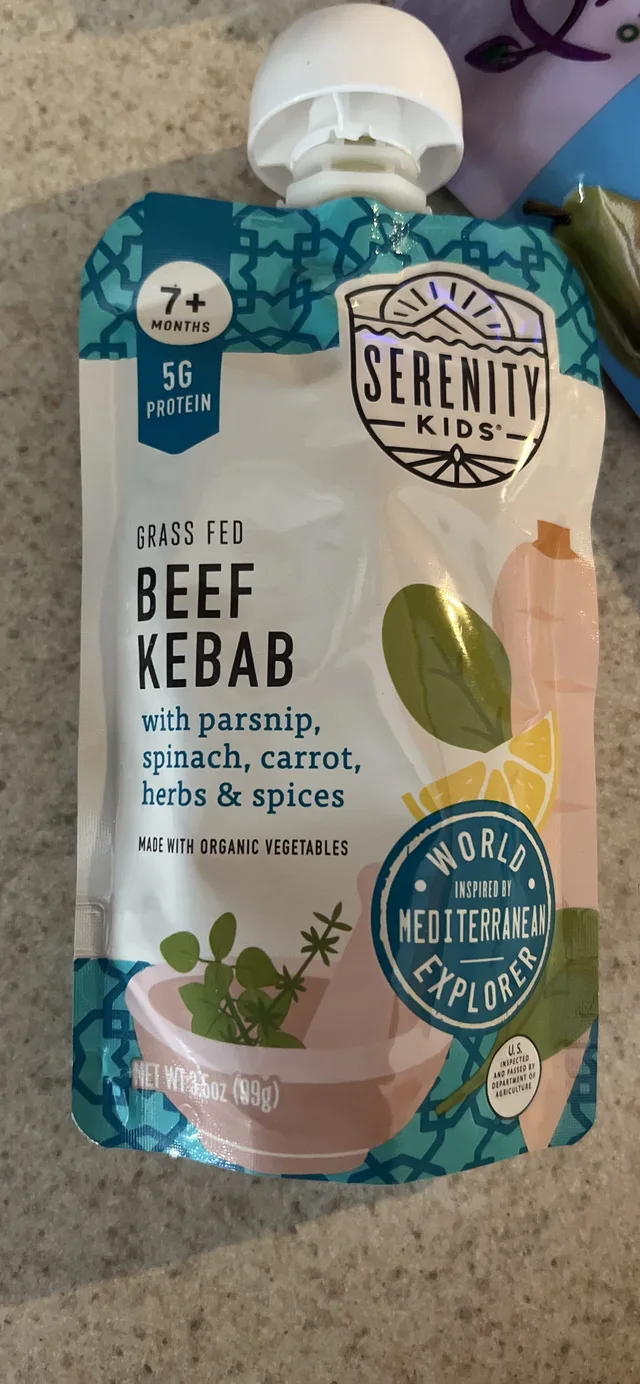 No added sugar· B
Serenity Kids
Beef Kebab
0g added sugar
Pouches - 14
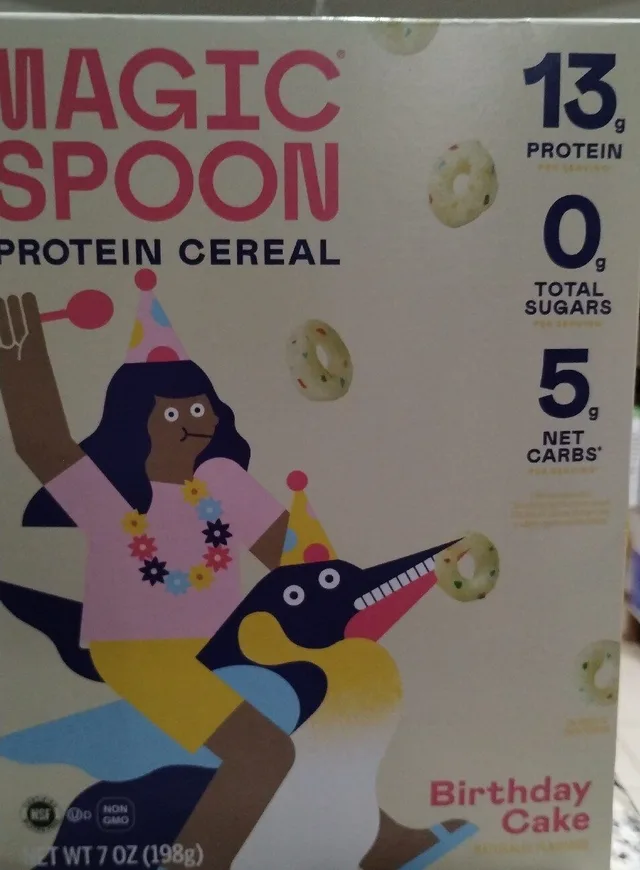 Sugar free· A
Magic Spoon
Birthday Cake Protein Cereal
0g added sugar
Cereal - 15
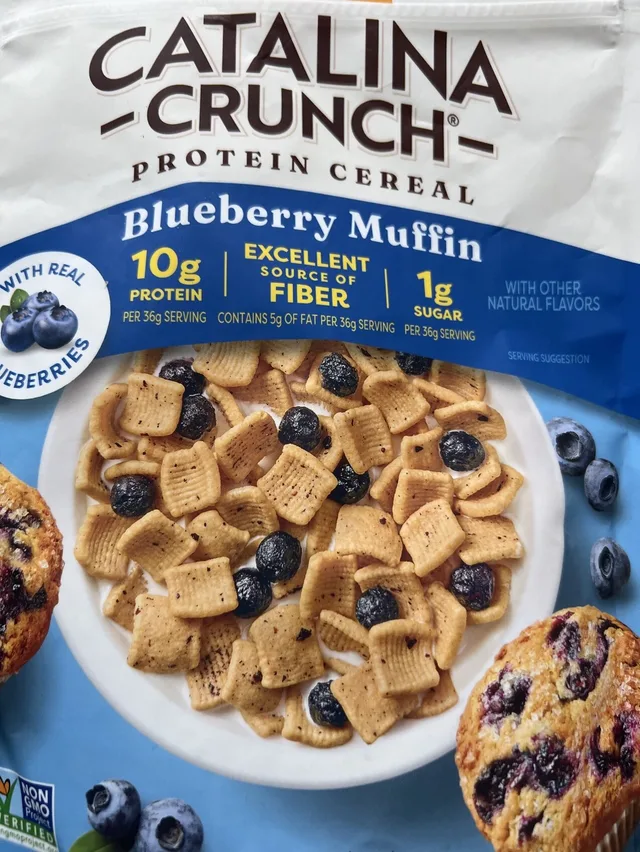 No added sugar· B
Catalina Crunch
Blueberry Muffin
0g added sugar
Cookies & Baked - 16
Serenity Kids
No added sugar· BSerenity Kids
Chicken Mexican Stew With Organic Veggies & Mexican Spices
0g added sugar
Pouches - 17
Serenity Kids
No added sugar· BSerenity Kids
Chicken Tikka Masala With Organic Veggies & Indian Spices
0g added sugar
Pouches - 18
Chomps
Sugar free· AChomps
Chili Lime Beef
0g added sugar
Meat Sticks & Jerky - 19
Magic Spoon
Sugar free· AMagic Spoon
Chocolate Chip Cookie Cereal
0g added sugar
Cereal - 20
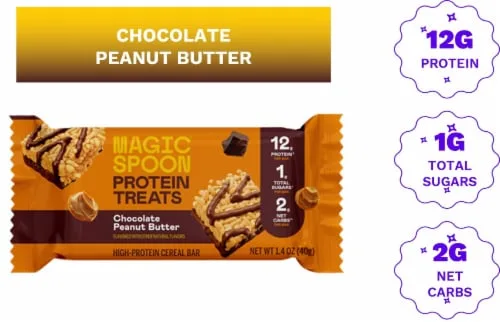 No added sugar· B
Magic Spoon
Chocolate Peanut Butter
0g added sugar
Spreads
Why this list, and how we chose— expand
"Picky eating" is one of the top-searched parenting topics, with peak prevalence between ages 2 and 6. Behind the umbrella term sit three different patterns: vegetable refusal (will eat protein and fruit, won't touch broccoli), protein refusal (will eat carbs and fruit, refuses meat and eggs), and selective sweet preference (will only eat foods that taste sweet, refuses any savory or bitter flavor). Different snack categories solve different patterns. The wrong call — using a sweet-leaning "kid yogurt" with 10g of added sugar to coax a vegetable refuser — actively backfires by reinforcing the sweet preference.
Of the 2482 products in our catalog tagged for picky-eater use cases or under-5 age groups, 10% have more than 5g of added sugar per serving — the products that are marketed as "kid snacks" but actually push the sweet-preference pattern further. Average added sugar for the picky-eater-tagged pool is 1.8g. For this hub we filtered to Tier A, B, and C (≤5g added sugar) so the list captures both strict zero-added-sugar wins AND the very-low-sugar reformulated options that often work better in practice for kids transitioning out of high-sugar pantries.
For vegetable refusers, the top picks are pouches where vegetables are the first or second ingredient (Cerebelly Brain-Building Pouches — spinach, beet, broccoli first; Serenity Kids Veggie Pouches — kale, butternut squash, spinach first; Once Upon a Farm Smart Blends — spinach, kale, and superfood blends). The puréed format means kids drink the vegetables without "seeing" them. Hidden-veggie baked formats (Wholly Veggie Veggie Tots — first ingredient is broccoli or cauliflower; Bitsy's Smart Kids — vegetables baked into cookies and crackers) work for the same pattern when pouches feel too "babyish" for older kids.
For protein refusers, the picks are kid-format yogurt and dairy with real protein per serving (Two Good Kids yogurt — 8g protein, 1g sugar; Stonyfield YoBaby Whole Milk — 6g protein), high-protein nut-butter pouches (Justin's Squeeze Packs — 7g protein), and the meat-stick category in kid-friendly sizes (Chomps Mini, Country Archer Bites). Eggs, cheese sticks, and edamame round out the protein-first picky-eater pantry — all 0g added sugar.
For selective sweet preference, the strategy is gradual swap: trade out the 10g-added-sugar kid yogurt for the 4g version, swap fruit roll-ups for freeze-dried fruit (single-ingredient, naturally sweet), and use 100% fruit pouches as the "candy" — Plum Organics, Once Upon a Farm Smoothies. The goal isn't zero-sweet (that backfires); it's shifting where the sweetness comes from (fruit instead of added sugar) so taste buds reset over 4–8 weeks.
A note for parents working with a pediatric dietitian or feeding therapist. The American Academy of Pediatrics distinguishes typical picky eating from Avoidant/Restrictive Food Intake Disorder (ARFID) — the latter affects roughly 1 in 25 children and requires clinical support. If your child has fewer than 20 accepted foods, has lost weight, or shows nutrient deficiencies, the snack-aisle picks here are a complement to clinical work, not a substitute. Most kid picky-eating is developmental and resolves by age 5–6 with consistent low-pressure exposure to varied foods.
Below is every product in our database tagged for picky-eater scenarios with ≤5g of added sugar, sorted by added sugar then by the picky-eater pattern it solves.
Frequently asked questions
- What are the best snacks for a picky eater toddler?
- For toddlers (ages 1–3): unsweetened applesauce pouches (Plum Organics, GoGo squeeZ Organic), veggie-first pouches (Cerebelly, Serenity Kids), cheese sticks (Babybel, Sargento string cheese), and freeze-dried fruit (Bare, Crispy Green). All 0g added sugar, soft textures, no choking-hazard risks. Avoid sweetened "toddler yogurts" and fruit-flavored gummies — they reinforce sweet preference at the most plastic phase of taste development.
- How do I get my picky-eater kid to eat vegetables?
- Three angles work: (1) puréed/hidden veggies in pouches and baked snacks (Cerebelly, Wholly Veggie, Bitsy's — vegetables are the first or second ingredient, kids ingest them without "tasting" the vegetable note), (2) repeated low-pressure exposure to whole vegetables alongside accepted foods (research shows 8–15 neutral exposures before acceptance for most veggies), (3) parent-modeling — kids eat what parents eat in front of them. The American Heart Association explicitly recommends pouches and hidden-veggie snacks as a complementary tactic, not a replacement, for whole-vegetable exposure.
- Are veggie pouches actually good for picky eaters?
- They're useful as one tactic. The clinical research (peer-reviewed feeding-therapy literature) shows that puréed-vegetable pouches deliver real vegetable nutrition (vitamin A, vitamin K, iron, fiber) to kids who otherwise refuse whole vegetables. Pediatric dentists do flag daily pouch use as a tooth-coating concern — so the recommendation is rotate pouches with whole vegetables and fresh fruit, not pouch-only. Cerebelly, Serenity Kids, and Sprout Organic are the consistent picks for "vegetable first" ingredient lists; many "fruit + veggie" pouches are 90% fruit by weight.
- What protein snacks work for picky-eater kids who refuse meat?
- Dairy is the most reliable protein for meat-refusers: string cheese (5–7g protein per stick), whole-milk yogurt (6–8g per cup), cottage cheese, milk. After dairy: eggs (6g per egg), nut butters in pouch form (Justin's Squeeze Packs — 7g per pouch), edamame (8g per cup), and the high-protein kids yogurt category (Two Good Kids — 8g protein at 1g sugar). For kids who will accept jerky-style textures, Chomps and Country Archer beef sticks deliver 9g of protein in a kid-portable format.
- What about Pediasure for a picky eater?
- Pediasure (and Boost Kid Essentials, Carnation Breakfast Essentials) are calorie-and-vitamin-dense drinks designed for kids who are clinically underweight, recovering from illness, or have diagnosed nutrient deficiencies. They're fortified milk-based drinks with 7g of protein and a full vitamin/mineral profile per serving — but they're also 12–16g of added sugar per serving (Tier E in our ranking). For most picky eaters who eat across food groups and grow normally, Pediasure isn't indicated — it's a clinical tool, not a daily-snack swap. Talk to your pediatrician first; if recommended, a Pediasure with whole foods at meals is the right pairing, not Pediasure as a snack replacement.
- How long does the picky-eater phase last?
- For most kids, peak picky eating is ages 2–6 and resolves around age 6–8 as taste-bud receptor density drops to adult levels and food neophobia fades. About 1 in 25 kids meets clinical criteria for ARFID and needs feeding-therapy support. If your child has fewer than 20 accepted foods, has lost weight, eats only one texture, or shows nutrient deficiencies on bloodwork, work with a pediatric dietitian or feeding therapist — the snack-aisle alone is not the right tool for clinical-level cases.
- Are there snacks that are both low-sugar AND kid-friendly?
- Yes — the entire Tier A and Tier B inventory on this site is the answer. The pattern that works is matching format to the picky-eater pattern: pouches for vegetable-refusers, yogurt and cheese for protein-refusers, freeze-dried fruit and unsweetened smoothie pouches for the "only-sweet" pattern. The trap is buying "kid snacks" with kid-coded packaging that hides 8–12g of added sugar — front-of-pack marketing is a poor proxy for what's actually inside.